
The soon to be terminated FCDO WASH Systems for Health programme in Malawi marked a welcome and long overdue shift in how the sector approaches the sustainability of rural water management. Moving the focus away from installing new hardware on top of premature breakdowns and towards strengthening the systems that keep services running is part of the right correction toward professionalising rural water provision and management.
Whilst the programme in Malawi has done real work convening government, donors and operators around the governance, data and financing discussions that sustainability depends on, it has a long way to go in addressing the practical operational issues and challenges relating to the actual provision of services. How to support, manage and incentivise within an evolving governance framework.
As WS4H reviews its progress, Beyond Water offers a perspective from the field: that every level of the system, from the District Water Development Office to the national Management Information System, ultimately rests on service providers who are both strengthened and financed to deliver and measure water services on the ground.
For stakeholders interested in making a step change to Malawi’s underperforming rural water management, there are fundamental messages from experience in Malawi:
- Understand the fundamentals of professionalised service provision and operational excellence. It’s an integrated service, it has to do and provide specific things.
- Set ambitious performance standards and demand robust independent evidence. Service providers need to be held to account.
- Demand transparency on costing. Not just field operational costs, but overheads, support costs, and hidden subsidies, in all their guises. If the plan is to ensure ownership by government, they need to understand all the costs.
- Support to service providers. Without them, systems change and governance initiatives will remain as abstract PowerPoint presentations.
Effective coordination
A programme of this ambition needs coordination that is genuinely oriented towards the operators making change happen on the ground, not only towards the systems being built above them. From Beyond Water's experience in Malawi, that requires the following:
Systems change is contingent on the “doers”
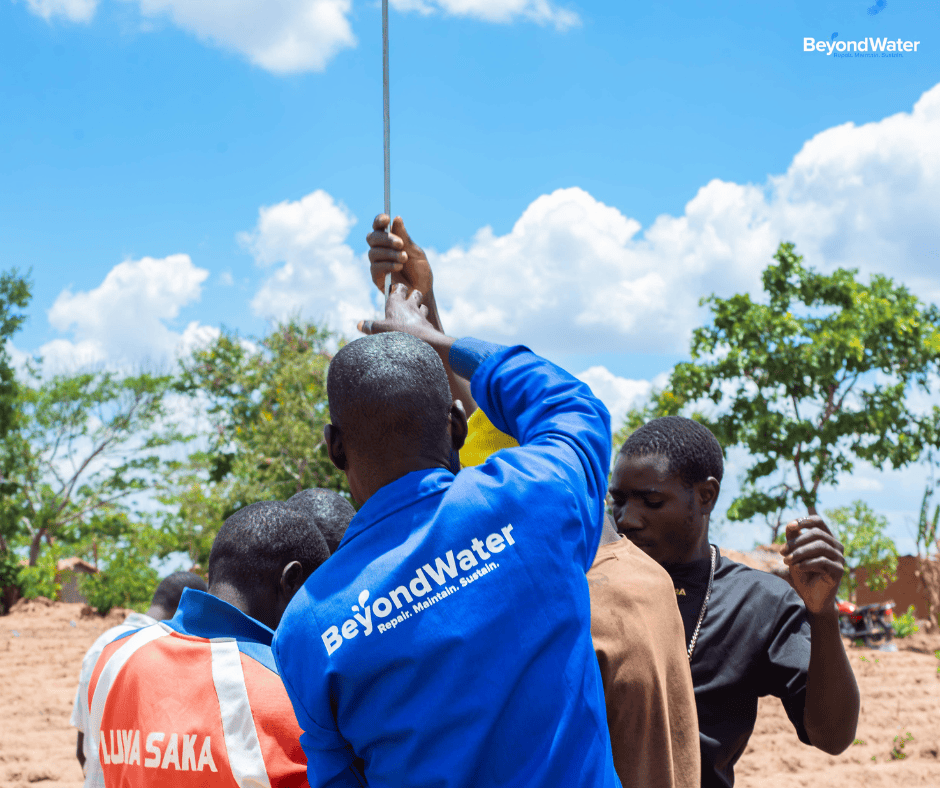
On the ground operators (the mechanics and field teams that actually deliver the services) are frequently the most overlooked and under-resourced actors in a systems-strengthening programme. A co-ordinating organisation must start from the position that professionalised service providers are the principal "doers" in any theory of change. The architecture of systems, governance and financing only works if operators are resourced and recognised as such.
Establish shared definitions early and hold the sector to them
What professionalisation means must be defined at the outset, not left to accumulate meaning over the life of a programme. That definition should set the bar high: not a minimum viable standard, but an ambitious description of what reliable, accountable, data-generating rural water management actually looks like. Support activities (financing instruments, technical assistance, capacity building) should then be deliberately designed to help service providers reach that standard. This is not an abstract ideal, real-world examples of professionalised rural water management exist including Beyond Water's own model in Malawi. They should be the reference point from which a programme's objectives are set. Finally, evidence must be demanded against KPIs that flow directly from those definitions and standards not against arbitrary scoring frameworks. And they must encompass all of the waterpoints serviced by a service provider in a particular area, not a cherrypicked selection that is unrepresentative of the waterpoints under contract as a whole.
Design supporting activities from the ground up
Off-the-shelf financing instruments, however well-designed in other contexts, can create perverse incentives when applied without adaptation. In Malawi, calibrating a results-based financing mechanism to the performance levels of the sector's most advanced providers immediately excluded the larger-footprint operators who most needed support and incentivisation to professionalise. Displacing a share of RBF with local revenue, disincentivised service providers from trying to act sustainably and raise user revenues. Context-specific financing, designed with and around the providers it is meant to support, produces better evidence and better outcomes than importing a methodology and expecting the field to conform to it.
Be pragmatic and flexible to specific contextual needs
Perverse incentives do not just reduce the quality of performance; they skew the evidence on which the whole programme depends. When service providers flag that an indicator, definition or payment structure is producing the wrong behaviours, a co-ordinating organisation needs the flexibility and the institutional willingness to act on that feedback quickly, before distorted data becomes the basis for policy conclusions.
Lessons to inform how the sector should move forward
If the programme is to convert its systems ambition into lasting change, five things need to be in place:
- Recognise service providers as the source of professionalised innovation and resource them to build, test and document the professionalisation pathway.
- Finance the field layer with the same consistency as the systems layer - predictable, multi-year, and linked to verified performance, so that service providers have the long-term surety and the incentive to continue improving.
- Integrate service providers into data collection and governance and settle how data is collected and independently verified, not only what data is wanted.
- Move the sector away from community-based management by setting minimum standards for professionalisation and supporting service providers to take graduated steps away from CBM.
- Funders focused on Malawi's rural water sector must align and make meaningful professionalisation a condition of the projects they finance. Loose definitions have allowed professionalisation to be articulated at a high and abstract level without much observable action on the ground. The governance structures that will eventually regulate service provision domestically do not yet exist. Until they do, funders are the most effective accountability mechanism available. That means agreeing on what professionalisation requires, embedding it as a genuine condition of funding rather than an aspiration, and holding grantees to account against it. Some funders are already moving in this direction and we’d encourage more to follow.
Why does systems strengthening depend on service providers?
Regulation of rural water supply happens at district level, and it requires three things:
· a framework for evaluating service provider performance,
· a platform to collect and visualise performance data,
· and the capacity to act on it through oversight and financing.
Each of these depends on a service provider in the field that is professionalised and has the capacity and expertise to deliver what is required.
· A national MIS is only ever as current as the data somebody collects and verifies.
· A results-based financing mechanism only functions where there is a credible provider generating performance that can be independently checked.
Without effective service providers, there is no data to evaluate, no service to govern, and no foundation for the wider ecosystem.
Evidence from Final Report(Malawi WASH Index Analysis Feb 2026)
This point is most starkly demonstrated in the Final Project Report's 'Monitoring' Building Block. An improvement from 29% (baseline) to 54% (classified as partially true)highlights data monitoring as a severe weakness. The report states that there is no national WASH M&E framework, and that mWater is infrequently updated because government officers are not trained and local government is under resourced. It should be noted that the national database (MWaMIS) was operational before WS4H having been commissioned in 2018.
A similarly poor increase from40% (baseline) to 45% for the 'Regulation & Accountability' building block makes this building block the weakest link in the project. The report highlights how new policy does not cover rural water and the national regulator only covers water resources, not services. It underscores the need to empower service providers to drive this change from the field level.
Move from CBM to PRM
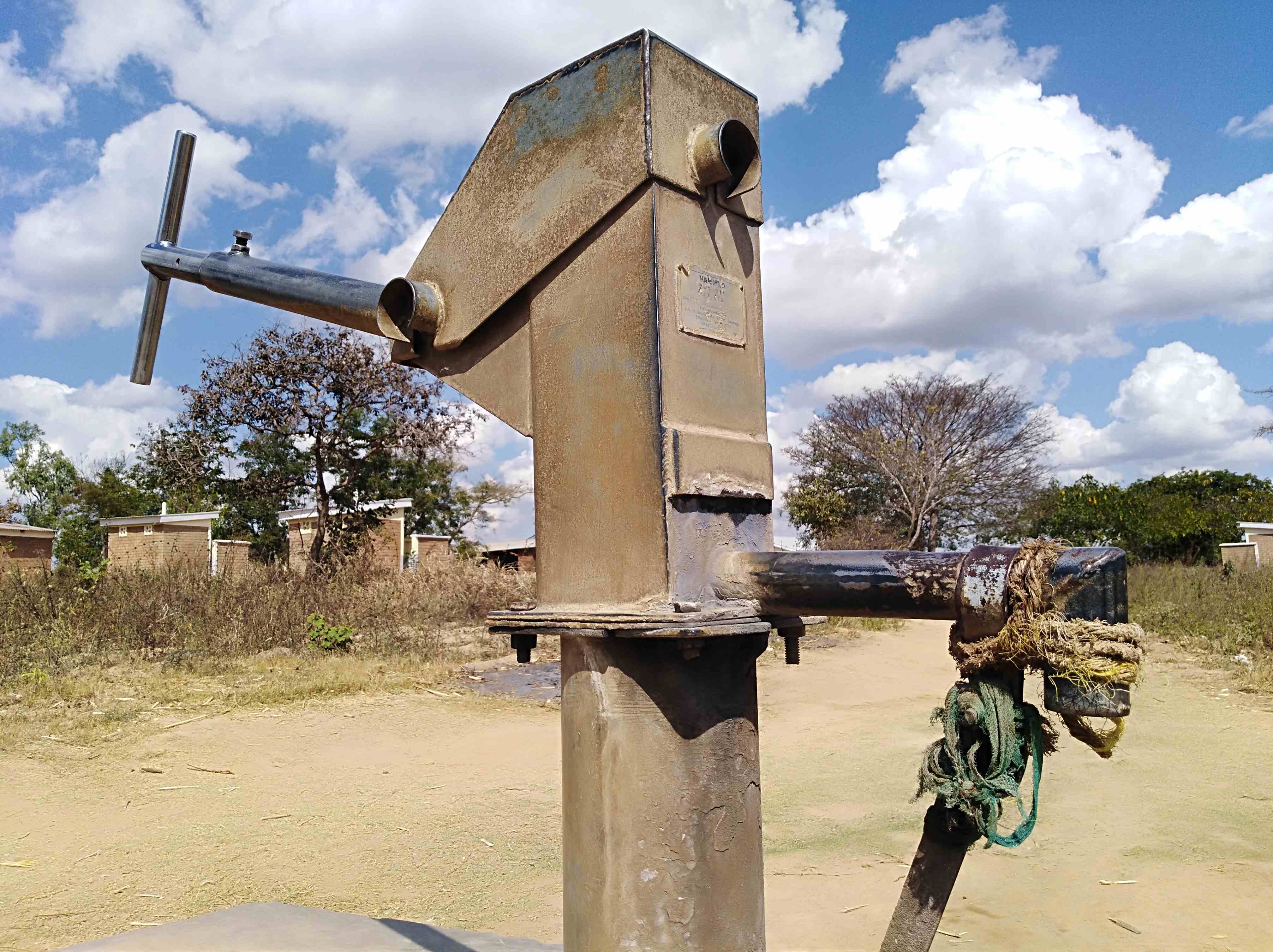
Using a 2023 Government of Malawi policy paper as its starting point, the programme has accepted something much of the sector still resists - community-based management has not worked .According to that report, 59.5% of the country's circa 60,000 handpumps are non-functional at any given time. The reasons are well understood:
- Volunteer committees carry an outsized burden of responsibility, without the resources or trust to maintain waterpoints.
- Area Mechanics operate in isolation, unsupported and unaccountable.
- Weak data leaves district governments unable to provide effective oversight.
Naming this, and accepting the need to professionalise, was an important step that the wider sector should build on rather than revisit.
How is change affected? And by whom?
This is where the design of the programme has fallen spectacularly short. The programme has largely treated professionalisation as a systems-level destination - better data, stronger governance, new financing instruments - without enough attention, or resource, for the operators who have to build the path towards it. The hybrid maintenance models, the lower-cost data-collection methods, the supply chains and the transparently costed business cases that make professionalisation real are developed by operators like Beyond Water experimenting in the field, often at their own commercial risk. Too little of the programme's energy and financing has reached this layer.
The clearest example is financing. When the results-based financing pilot closed early, the operators who had reorganised around it were left carrying the cost of innovations the wider system still wants to use. Treating the field layer as fundable and then defundable, while the systems work continues above it, sends the wrong signal. Service providers are not a delivery detail beneath the system. They are an integral part of the system that produces the evidence, the cost data and the methods that everything else relies on.
.jpg)
.png)